Traveling and Learning
Traveling and Learning
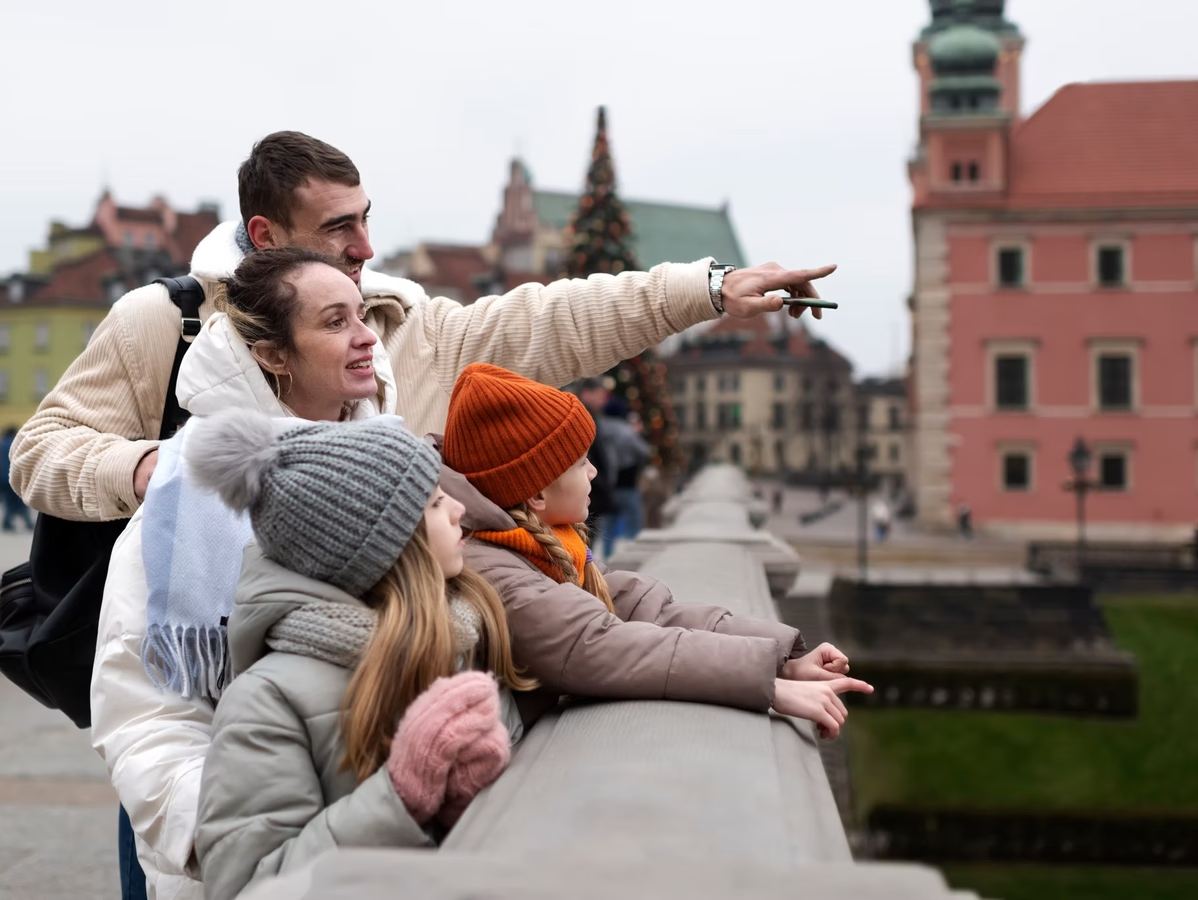
One of the best ways to teach children geography is during trips when we can show them different landforms, unique vegetation and climate, and many other things that can be seen and experienced firsthand. But when considering geography combined with mission, a great opportunity to teach this is during missionary trips. Our family loves to travel, but especially when we can combine travel and missions. A few years ago, we took one such trip to Bolivia, and it was a great learning experience for all of us.
To take advantage of the learning opportunity and reduce costs, we planned to travel by car to the border and then take a train or bus to Cochabamba, our final destination. It was a big challenge when we thought about the time and fatigue involved, but a great adventure when we considered the opportunity to truly get to know the country, its culture, and its customs—something we definitely wanted to offer our daughters.
It was approximately a 40-hour journey by car, train, and bus from our home to Cochabamba. We passed through Campo Grande and Corumbá-MS, where we visited dear relatives, and we also got to travel through the heart of the South Mato Grosso Pantanal and experience the incredible beauty of that region. This was another geography and science lesson in itself, as we were able to see many typical animals like alligators and turtles up close.
After leaving the car in Corumbá, at relatives' house, we were taken to the border where we took a train to Santa Cruz and then a bus to Cochabamba. During the journey, stopping in different towns and villages, we were able to learn a bit about Bolivian culture and customs, as well as appreciate the diversity of the country's natural beauty. The trip began in a flatter region in the south of the country, with low trees (cerrado-type vegetation) and a hot, humid climate. After Santa Cruz, the vegetation became denser, with thick forests and mountains intersected by waterfalls. After climbing the mountain range towards Cochabamba, the change was even more radical. Suddenly, we were at a very high altitude, the climate was drier and colder, and the vegetation was completely different: snow-capped peaks, lakes thousands of feet high, and landscapes that often resembled those seen in Europe. We pointed all of this out and discussed it with our daughters throughout the trip.
As we approached Cochabamba, we also noticed that people dressed more traditionally than in other places we had passed through. At every bus stop, which was a true cultural immersion, children and women would board, shouting: “Pollo y charque”! These were the famous vendors selling lunchboxes of rice with chicken or dried meat, or humming the words “Cuñape,” a type of Bolivian cheese bread.
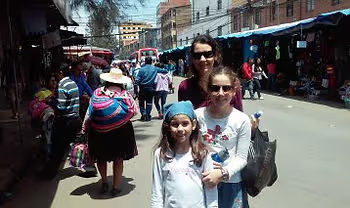
We spent a day in Cochabamba, where we took one of those typical overcrowded Bolivian "vans" and visited "La Cancha," a huge, very traditional street market in the city. At the end of the day, we were taken in a small, very colorful bus to the campsite where we would spend the Carnival holiday, which, by the way, is also widely celebrated there with decorations, music, drinks, and many playful antics with people trying to throw "water" and other things at cars and buses passing in the streets. I had the "privilege" of being hit by a small water bag through the bus window.
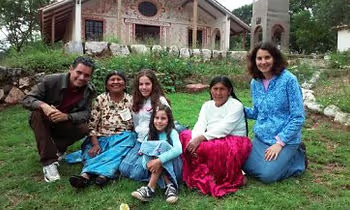
The reason for our trip was to participate in a camp during the long weekend. It was a camp with Adventist brethren from several cities near the Cochabamba region, where we learned a great deal through wonderful lectures and testimonies. We also presented health lectures, shared our testimony, and participated in the music. This annual gathering, organized by a lay ministry in Cochabamba, aims to encourage families to seek a more intimate relationship with God and get involved in mission work. We were impressed by the large number of young people present, many of whom lived in an orphanage maintained by the ministry. We had the opportunity to talk and get to know some of them better; they also have a heart for mission and wish to dedicate their lives to sharing God's love with others.
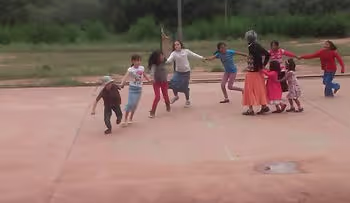
The children had the opportunity to practice Spanish with the friends they made and by leading worship moments during the meetings. In addition to enriching their vocabulary, they also learned some customs and games from Bolivian culture by participating in the children's activities provided for them during parts of the event. At this event, and throughout our entire stay there, we also got to know different typical dishes and learn about the country's main cultures.
Just as in Brazil and many other places, we also saw and learned about the sad reality of people living with illnesses due to poor lifestyle choices. Poverty itself is not necessarily synonymous with illness, but ignoring health laws, whether in poverty or wealth, always brings sickness and sadness into people's lives. God desires us to be healthy, regardless of our social class, and wants us to use our bodies and talents for His honor and glory. Upon visiting this country, we felt even more strongly how important it is to combine evangelism with the health message.
I cannot share all the many interesting details that occurred during the trip, but I would like to say that it is worth making a little sacrifice, facing more fatigue and challenges, to give our children a more missionary perspective of the world. May God help us seize opportunities!
Rute Bazan

