A Day of Learning
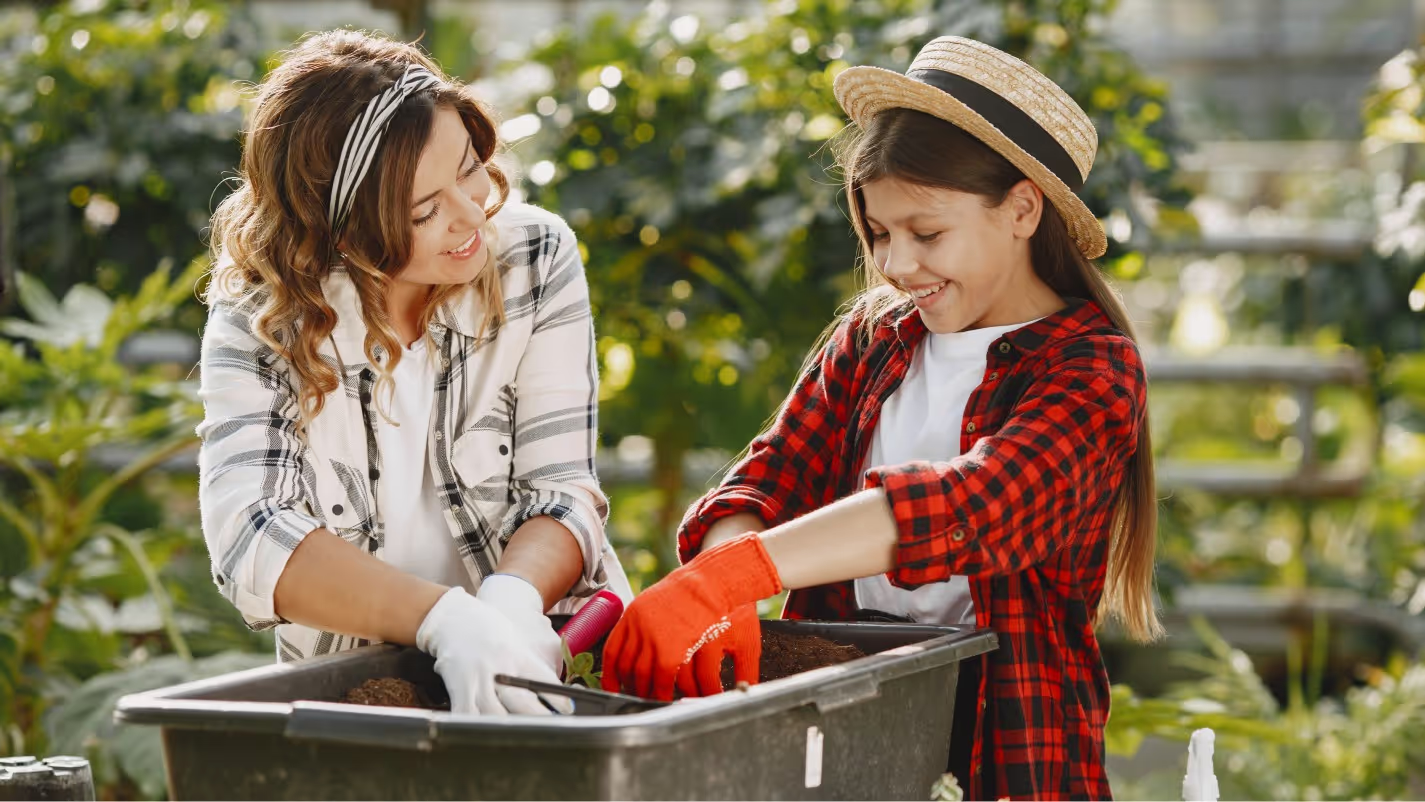
One thing I've learned is that educating means seizing the unique opportunities of each moment of the day to satisfy children's natural curiosity. Doing this to teach concepts and values is the greatest discovery I've made in life, because they learn so much more when they are interested in learning, but it doesn't happen every day. Sometimes, teaching is more planned and structured, but days like the one I'm about to recount are special, and they remain in my mind as one of the most spontaneous learning days in our home. At the time, we lived in the US, and my daughters were between 7 and 10 years old.
After breakfast and our routine morning activities, we got ready to go to the library, which was about 20 minutes from our house. We had some books to return, but one of them was on loan to some friends. So, we went to their house to pick it up. When we arrived, their younger daughter came to show us a kit with a recycled paper-making machine she had recently received. My daughters were fascinated by the machine, and as we left for the library, we spent most of the way talking about recycling, eventually moving on to the topic of decomposition. How long does it take for things to decompose? Paper, iron, wood, etc. Since I didn't know much about it, I promised that once we got home, we would research the topic.
We went to the library, returned the books, and picked up others as usual. As we left the building, we noticed an exhibition on decomposition in the square right in front. We had never noticed it before, but that day, in a special way, it jumped out at us. It was a garden bed with several rusted and decaying objects (a bicycle wheel, a sewing machine, and others) left there to decompose naturally. There was also a sign talking about the importance of recycling.
As we walked to the car, I noticed several men sweeping the square. I realized they were wearing prison uniforms and that there were some police officers nearby (a somewhat common sight in the US). Some of them smiled and waved at the girls. As soon as we got into the car, they asked, somewhat suspiciously, who those men were, and I explained that they were inmates from a penitentiary doing some kind of “educational work.”
The incident dominated our conversation for a while, but then we fell silent, and I noticed a worried expression on the younger one's face. Finally, she asked, “Mommy, if we lived in Brazil, could you be arrested for homeschooling us?” (Look where her imagination went!)
I chuckled and explained that it wasn't quite like that, that when a family was questioned, they would have the opportunity to discuss, that the children might be tested, and that things would be resolved differently. She became thoughtful and asked me if she would be able to pass one of those tests since she didn't learn like other children. I explained that their education was different, but that they would certainly know how to answer the questions. So, we started pretending we were taking a “test,” and I asked questions about the three natural kingdoms, a topic we hadn't formally studied yet. They answered correctly and were relieved to realize they knew the material.
When we got home, we were still talking about the three kingdoms, and I suggested we make a poster with collages of pictures for each kingdom, but they weren't interested. (Tip: I'm a visual learner, but they aren't, which is why they weren't interested). I thought and prayed, and then the idea came to me to suggest they play “bookstore” and sort our books into the three categories: animal, vegetable, and mineral. They loved the idea, and within five minutes, our living room had transformed into a bookstore with different sections marked, complete with a cash register, play money, an improvised barcode scanner, and everything else you'd find in a bookstore. We then started playing at shopping, giving change, wrapping books, and that's where calculations and math came in... and much more.
We took a break to prepare lunch, and after lunch, as promised, we did some internet research on decomposition. We found a list showing how long it takes for different materials to decompose. We talked a lot about it, and then we went to the backyard to prepare a spot for our composting station.
Later, they asked to invite two neighborhood friends over to play “bookstore.” The friends arrived and spent a long time having fun: discussing the topics of the books, writing little signs, calculating prices, and taking turns as buyers and sellers in the bookstore.
Days like this filled my heart with joy, seeing that the process of teaching and learning is much more natural than we think. God created us with a curiosity to learn; He endowed us with an incredible machine that is our body. Through our senses, we discover the world around us. We take this information to the brain where it's processed, we make sense of everything we experience, and through this process, we grow day by day. This is beautiful and natural! Let's be mindful, parents, to participate in this process with our children and seize these precious teaching opportunities!

