Everyday Physiology
“Children should be taught, even when very young, the rudiments of physiology and hygiene, through simple and easy lessons. And this work should be initiated by the mother at home, and faithfully continued in school. As students advance in age, instruction in this regard should continue until they are able to care for the house in which they live. They should understand the importance of preventing diseases by preserving the vigor of each organ, and it is important that they be instructed in how to treat common illnesses and accidents.” Education, p. 196
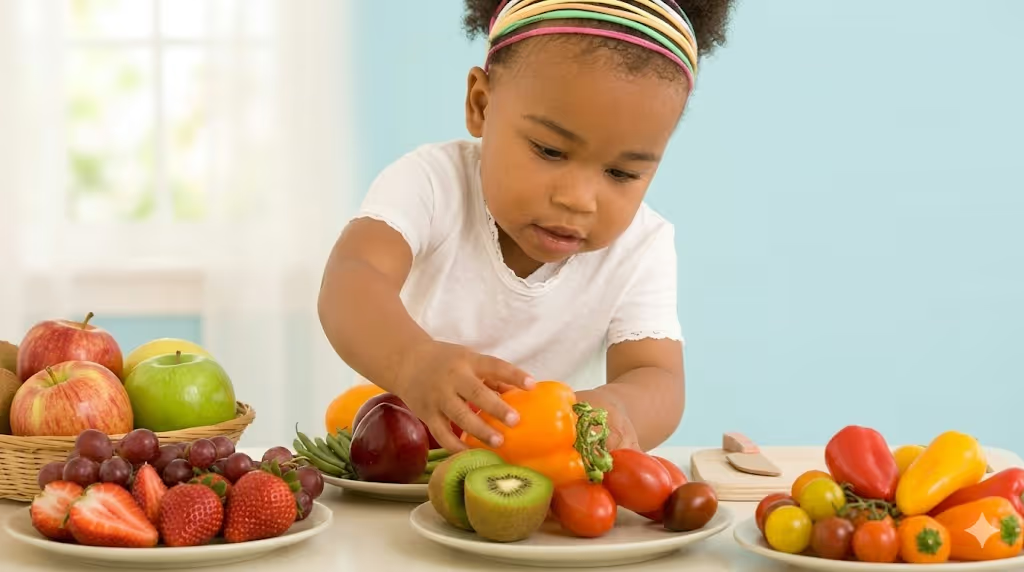
When my children were growing up, we often discussed food during meals. Do we eat flowers? And roots? And stems? Is there a seed on your plate? It's easy for children to forget that rice and beans are seeds and that broccoli is a flower. Understanding the parts of plants can be done right from the plate.
Other times we would discuss where the food was going, how it got there, and what happened to it in the process. Understanding that the esophagus is the tube that carries food from the mouth to the stomach is easier to grasp when you're actually swallowing food. Comparing it to the water pipes that bring water into and out of the house, and understanding that the intestine is a coiled tube to take up less space, like the garden hose outside, also helps.
Why we should chew well can turn into a lesson on how digestion occurs mechanically with teeth and chemically in the stomach and intestines. The 'factories' that produce these chemicals are other organs that aid digestion. These conversations come and go as opportunities arise and continue as long as there's interest. They learn how the body works in their daily lives.
A stomach ache or other health problem is an opportunity to think about what might have caused it. Did we break any health principles? What made us weak enough to catch this flu? With natural treatments, we explain why they work. Soaking feet in hot water causes blood vessels to dilate and draws more blood there, decongesting the head (which has a cold compress on the forehead) and helping to relieve head pressure and eliminate pain.
Contrast baths (hot and cold) increase circulation and the production of white blood cells (the 'little soldiers'), thus making the body stronger to fight off illness.
The great controversy takes place in the universe, in nature, and within our bodies. Everything we do helps one side or the other. God strengthens us, and His laws protect us. Satan tries to weaken us and bring disease and death, both physical and spiritual. What doesn't strengthen, weakens. Everything we do contributes to one side or the other. When children understand this, it becomes easier to see that God is a God of love and His laws are for our protection, health, and happiness.
Helping them think from cause to effect and perceive the relationship between things is one of the greatest gifts we can give our children.
My love for science comes from admiring the beauty of these relationships. Understanding how connections are made and appreciating God's brilliant solutions, so intelligently resolving everyday problems. How God creates food using light, air, water, and earth. He makes food from what is abundant and free! From these colorless and shapeless things, He creates thousands of different foods, colorful, and with varied tastes, smells, and textures.
What a wonderful God! Let's help our children get to know Him every day, in every opportunity we have.
Silvia Martins

